Piercing Aftercare: Cleaning, Bumps and Infection Signs
Piercing aftercare with sterile saline, bump and infection warning signs, plus practical advice for Seattle rain gear, pools and lake swimming.
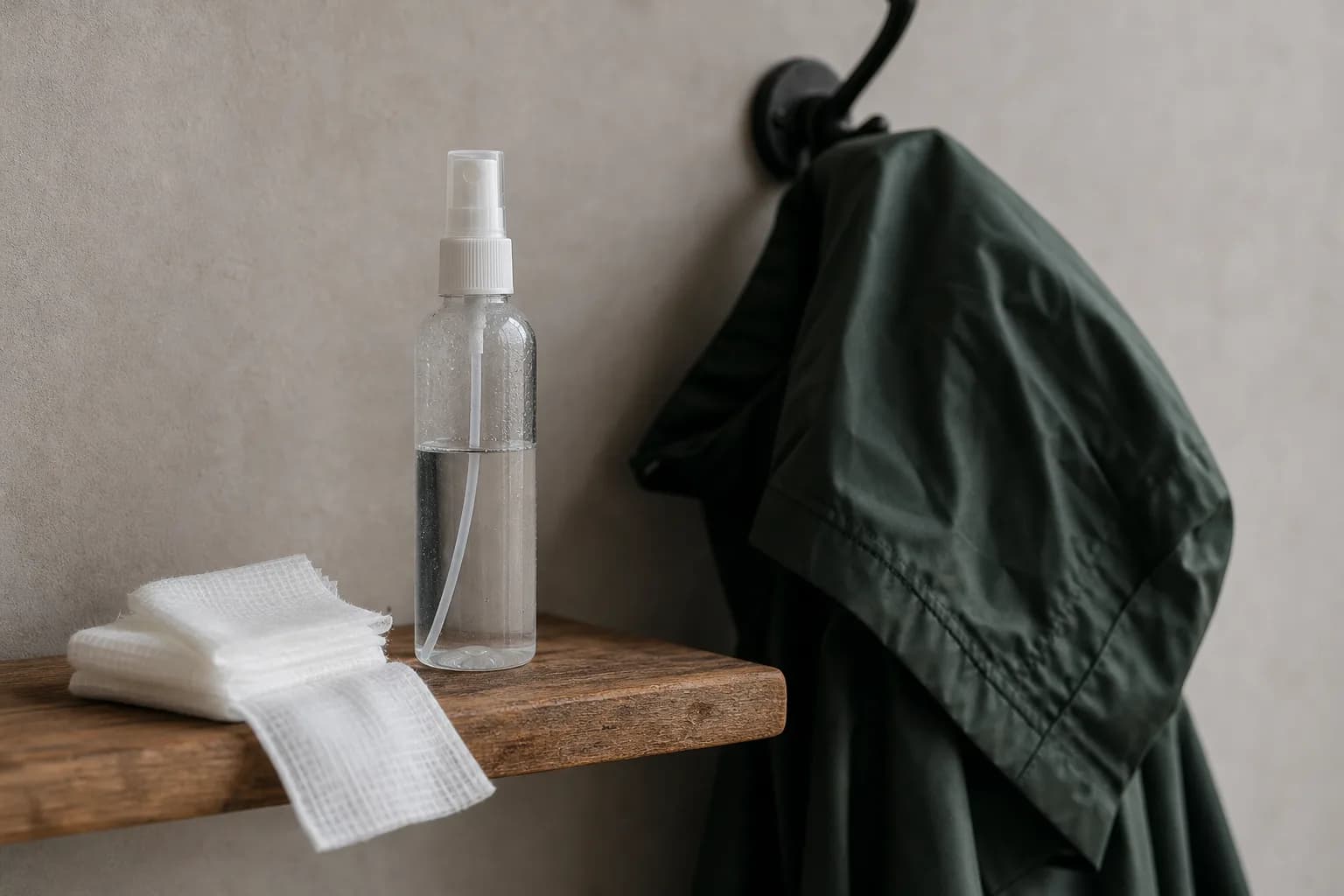
AI-generated illustration
Key takeaways
- Cleveland Clinic recommends store-bought sterile saline rather than homemade mixtures, which can be too salty.
- The Association of Professional Piercers advises against twisting or rotating healing jewelry.
- A piercing bump is not necessarily infected; an ear keloid is scar tissue that extends beyond the original injury.
- Upper-ear pain, redness and swelling warrant prompt medical care, according to Cleveland Clinic.
- King County advises avoiding lake water for at least 24 hours after heavy rainfall and swimming near a combined sewer overflow for 48 hours.
Piercing aftercare starts with clean hands, sterile saline wound wash and gentle drying with disposable material, following the Association of Professional Piercers’ routine. Ask your piercer to identify the product and write down a cleaning schedule for your placement.
Cleaning instructions, a new bump and plans to swim raise different questions. Use the routine below for everyday care, the symptom checklist to recognize when medical help is needed, and the Seattle-area precautions to plan around rain gear, sleep and lake outings.
How do you clean a new piercing?
Follow this sequence from the Association of Professional Piercers (APP):
- Wash your hands before handling the piercing for cleaning.
- Spray the healing piercing with sterile saline wound wash. Ask your piercer to identify an appropriate product so you know what to buy.
- Dry it with clean disposable gauze or cotton swabs. The APP cautions that cloth towels can harbor bacteria and snag jewelry.
Keep the product name and your written instructions together. If you're shopping for saline spray for piercings and aren't sure whether a product matches the recommendation, send the piercer a photo of its label rather than guessing.
Which saline should you buy?
Choose store-bought sterile saline rather than mixing salt and water at home. In its May 21, 2024 guidance, Cleveland Clinic explains that homemade mixtures can be too salty, causing dryness and delayed healing.
Ask the piercer to write down how often to use the saline for your particular placement. Make the schedule explicit: which product, when to use it and how to dry afterward. Don't turn a general cleaning recommendation into a schedule of your own.
What about cleanser and water?
The American Academy of Dermatology (AAD) describes a different cleaning approach. Its September 20, 2023 instructions call for a mild, fragrance-free cleanser and water at least once daily, followed by thorough rinsing (AAD).
That frequency belongs to the AAD's cleanser-and-water routine; it is not a saline-spray schedule. If your aftercare sheet lists both approaches without explaining how they fit together, ask the piercer to clarify rather than assuming you should perform both routines each time.
Safety first: If a piercing appears infected, seek immediate medical help. Leave the jewelry in unless a doctor tells you otherwise, following the NHS's April 18, 2023 guidance. The detailed warning signs appear below.
What should you avoid, and how should you handle conflicting advice?
Avoid hydrogen peroxide and antibacterial soaps on a new piercing. The AAD says these products can damage healing skin. Keep your product discussion focused on the sterile saline and mild-cleanser options above rather than assembling a larger collection of cleaning treatments.
The APP also says moving jewelry during cleaning is unnecessary and may irritate the piercing. Its healing instructions explicitly prohibit twisting, spinning or rotating jewelry (APP aftercare guidance). Cleaning is not a reason to turn it.
If your instructions say to rotate the jewelry
Bring the disagreement to your piercer directly:
“Your instructions say to turn the jewelry, but the APP says not to rotate it. Which instructions should I follow for this piercing?”
Ask for a clear, updated aftercare sheet rather than trying to combine contradictory directions. You should be able to explain the routine back without having to decide which instruction takes priority each time you clean.
If you're unsure about ointment
Take conflicting product instructions to a dermatologist or physician. A useful question is:
“Should I use petroleum jelly or another ointment around this piercing, and how does that fit with my cleaning routine?”
Bring the product names and your studio's instructions to that conversation. Ask the clinician to spell out what to use and what to leave out, so you have a single plan rather than several competing recommendations.
Is a piercing bump normal healing, a fluid bump or a keloid?
A piercing bump does not, by itself, establish that you have an infection or a keloid. The descriptions below help organize questions for a medical professional; they are not a way to diagnose a lump from a photo.
The NHS says tenderness, itching, slight redness or darker surrounding skin, and pale fluid that forms a crust can occur during the first few weeks of healing (NHS, April 18, 2023). Those findings do not prove that a particular piercing is healthy.
A bump behind an ear piercing is not necessarily infected. Cleveland Clinic's April 5, 2023 guidance describes some small bumps as trapped-fluid granulomas and says warm-water compresses can treat those bumps. That advice is specific to that type of bump—not every lump near jewelry.
An ear keloid is fibrous scar tissue extending beyond the original injury. It may take three to 12 months to become noticeable and does not disappear without treatment, according to Cleveland Clinic, August 22, 2022.
| Finding or concern | Source-described features | Next step |
|---|---|---|
| Early healing findings | Tenderness, itching, slight redness or darker skin, and pale fluid forming a crust during the first few weeks | Use your agreed aftercare routine; seek medical assessment if you're concerned about symptoms. |
| Trapped-fluid ear bump | Some small bumps behind ear piercings are fluid-filled granulomas, not necessarily infection | Ask a clinician whether this description applies before treating an unexplained bump as a granuloma. |
| Suspected infection | Swelling, pain, heat, marked redness or darkening, blood or white/green/yellow pus, or feeling unwell (NHS) | Seek immediate medical help rather than relying on routine aftercare. |
Don't assign a diagnosis simply because it resembles an online example of an “irritation bump” or “keloid piercing.”
When does a piercing need medical attention?
Use the NHS's infection signs as a reason to seek medical assessment, not as a checklist you must completely fill before asking for help. Possible signs include:
- Swelling, pain or heat around the piercing.
- Marked redness or darkening of the surrounding skin.
- Blood or white, green or yellow pus.
- Feeling hot, cold, shivery or generally unwell.
If these signs make you suspect an infected piercing, follow the immediate-help instruction above. Contact a medical professional rather than relying only on a studio visit or waiting for a routine piercing appointment.
A studio can discuss its cleaning instructions, but infection concerns need medical assessment. When asking for care, describe what you're noticing, where the piercing is and what products you've been using.
Upper-ear cartilage symptoms need prompt care
Cleveland Clinic advises prompt medical care for upper-ear pain, redness and swelling. Its June 10, 2022 guidance explains that perichondritis is an infection of the tissue covering ear cartilage (Cleveland Clinic).
An untreated abscess can interrupt the cartilage's blood supply, cause tissue death and permanently deform the ear. This is a reason to take upper-ear symptoms seriously, not a diagnosis to make yourself.
Do not treat a painful, red, swollen upper ear as merely a cosmetic cartilage piercing bump. Tell the medical professional that the symptoms involve the upper ear so the location is clear.
How should you handle Seattle rain hoods, hats and sleep?
The APP recommends washing hats, scarves and headbands regularly and avoiding clothing-related friction and pressure on healing piercings (APP aftercare guidance).
For Seattle rain gear, apply that general advice by checking where a hood edge, hat or scarf meets your jewelry. If it presses or rubs against the piercing, adjust the fit or choose something that avoids that contact. This is an application of the APP's friction guidance—not a separate Seattle-specific medical rule.
Try the check with the hood positioned as you actually wear it. Ask your piercer about any contact you're unsure how to avoid, rather than assuming that a familiar hat still fits comfortably around new jewelry.
Sleep pressure deserves attention, too. The APP says sleeping directly on healing cartilage can irritate it and change its angle; placing the ear in a travel pillow's opening can reduce direct pressure (APP).
Use the placement-specific piercing healing times to prepare questions about your piercing, then confirm your own care plan instead of treating a chart as a clearance date.
Can you swim with a new piercing in a pool or lake?
Stay out of recreational water while you have an open piercing wound. The CDC's June 6, 2025 guidance includes piercing wounds in its open-wound precaution. If someone enters the water, the CDC says the wound should be completely covered with waterproof bandages (CDC).
Apply that precaution to both swimming-pool and lake plans. The decision is about whether an open wound remains—not a universal countdown from the appointment. Before making plans, ask your piercer or a clinician about your particular placement and how the open-wound precaution applies.
Don't assume that a planned swim is cleared simply because an appointment happened a certain number of days ago. If you're considering the CDC's waterproof-bandage provision, ask a clinician how to apply it to the piercing's location rather than assuming any covering will satisfy it.
What else matters for Seattle-area lakes?
King County advises staying out of lake water for at least 24 hours after heavy rainfall and avoiding swimming near a combined sewer overflow for 48 hours, according to its swimming guidance.
Those are additional water-quality precautions for local lake outings. They are not piercing-healing timelines, and waiting out either interval does not override the CDC's open-wound precaution.
Keep the questions separate when planning: does the piercing still involve an open wound, and do rainfall or sewer-overflow precautions also affect the outing? A favorable answer to the lake-timing question does not settle the piercing question.
What should you confirm with your piercer next?
Bring a short checklist to your next conversation:
- Ask the piercer to identify the sterile saline wound wash to buy.
- Get the cleaning schedule in writing, including how to dry afterward.
- Clarify any instructions about cleansers, jewelry movement or other products.
- Check whether your usual hood, hat or sleep position puts pressure on the jewelry.
Use a piercing appointment for practical instruction and pressure questions.
For appointment planning, use the Seattle piercing directory and the guide to planning an ear-piercing appointment in Seattle. The published Seattle piercing prices and fee questions can help you prepare follow-up cost questions. Ask the studio directly what a follow-up visit includes rather than assuming aftercare services are covered.
Frequently asked questions
What does an infected ear piercing look or feel like?
The NHS lists swelling, pain, heat, marked redness or darkening, blood or white, green or yellow pus, and feeling shivery or generally unwell as possible signs. It recommends immediate medical help if a piercing appears infected.
Does a bump around a piercing always mean infection?
No. Cleveland Clinic says some small bumps behind ear piercings are trapped-fluid granulomas rather than infection.
Do ear keloids go away on their own?
Cleveland Clinic says ear keloids do not disappear without treatment. They are fibrous scars that extend beyond the original injury and may become noticeable three to 12 months afterward.
Should I remove my earring if I think the piercing is infected?
The NHS says to leave jewelry in unless a doctor tells you to remove it. Seek immediate medical help for suspected infection.
How can I plan lake swimming during Seattle's rainy season?
The CDC advises staying out of recreational water while a piercing wound remains open. Separately, King County advises avoiding lake water for at least 24 hours after heavy rainfall and swimming near a combined sewer overflow for 48 hours.
Is homemade salt water suitable for cleaning piercings?
Cleveland Clinic recommends store-bought sterile saline instead. Homemade mixtures can be too salty, causing dryness and delayed healing.
Sources
- 1Aftercare – Association of Professional Piercers — Association of Professional Piercers
- 2Saline Solution: What It Is, Types & Uses — Cleveland Clinic
- 3How to care for a new piercing — American Academy of Dermatology
- 4Infected piercings - NHS — NHS
- 5Infected Ear Piercing: Symptoms, Treatment & Prevention — Cleveland Clinic
- 6Keloid on Ear: What It Is, Piercing, Removal, Scar, Behind Ear — Cleveland Clinic
- 7Perichondritis: Symptoms, Causes & Treatment — Cleveland Clinic
- 8Preventing Swimming-related Illnesses | Healthy Swimming | CDC — Centers for Disease Control and Prevention
- 9Lake swimming beach bacteria and temperature - King County, Washington — King County